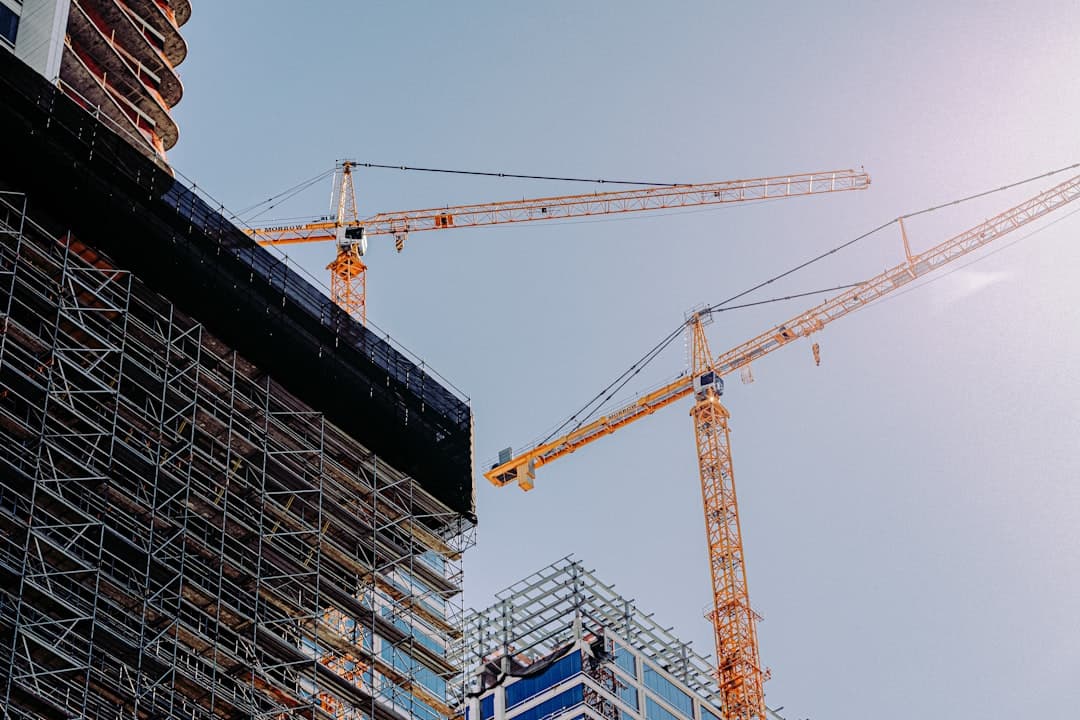
Construction company website design is the practice of building a contractor site that turns project searches into qualified bids and calls. A strong construction website leads with proof of completed work, lists services and the areas served, displays licensing and insurance for trust, and makes requesting a quote the obvious action on every page.
Construction is a high-trust, high-value purchase. A property owner choosing a general contractor or a developer selecting a builder is committing serious money and months of disruption, so they vet carefully. The website is where that vetting starts, and a site that looks dated or hides project photos and credentials loses the bid before the first meeting.
This guide covers the pages, proof elements, and conversion path a construction company website needs, plus why building in Framer gives contractors a fast, professional site they can keep current. Framer Websites builds every client site exclusively in Framer, and the recommendations here come from service and project-based sites we have shipped.
Key takeaways
- Completed-project galleries are the strongest proof a contractor can show, so lead with real work, not stock photos.
- List services clearly and name the geographic areas served so the right local searches find you.
- Display licensing, insurance, certifications, and safety record to clear the trust hurdle early.
- A request-a-quote path on every page, plus a click-to-call number, converts high-intent visitors.
- Framer delivers fast, mobile-strong sites with a CMS for projects and services, updatable without a developer.
What a Construction Website Has to Do
A contractor site has one mission: convince a serious prospect that you are competent, credible, and worth a conversation, then make starting that conversation easy. Everything on the page should build trust and reduce friction toward a quote request.
Prove competence with work
Property owners and developers want evidence you can deliver. A portfolio of completed projects, with real photos and a line about scope, does more than any claim of “quality craftsmanship.” Show the work and let it speak.
Establish credibility fast
Licensing, bonding, insurance, certifications, years in business, and safety record are not fine print for construction buyers, they are decision criteria. Surfacing them clearly removes a major objection before it forms.
Make the next step obvious
A high-intent visitor ready to request a bid should never hunt for how. A prominent quote request and a tappable phone number keep the path to contact short on every page.
The Pages a Construction Site Needs
Construction sites stay focused. You need pages that prove the work, explain the services, establish trust, and capture the lead.
| Page or section | Purpose | What it contains |
|---|---|---|
| Home | Establish credibility instantly | Featured projects, services, service area, quote call to action |
| Services | Capture specific searches | Each service, residential or commercial, new build or remodel |
| Projects or portfolio | Prove the work | Completed-project galleries with scope and location |
| Service areas | Win local searches | Cities and regions served, with local detail |
| About | Build trust | History, team, licensing, insurance, safety record |
| Testimonials | Social proof | Client reviews, repeat clients, references |
| Contact and quote | Convert | Quote form, phone, project details, map |
Service pages and project pages carry the SEO
A property owner searches “commercial roofing contractor” or “home addition builder near me,” not “construction.” Individual service pages targeting each specialty, paired with project pages that demonstrate that work, capture intent a single overview page cannot. A CMS-driven structure makes adding these pages straightforward.
Service-area pages for local reach
Contractors serve defined territories. Pages dedicated to the cities and regions you work in help you rank for “general contractor in” searches across your service area, and they reassure prospects that you actually work where they are.
Designing for a High-Trust Purchase
Construction buyers are cautious. The design should feel solid, professional, and current, signaling that the company behind it is the same.
Mobile first
Many prospects search on phones from a job site or property. Large tap targets, a click-to-call phone number, and a quote button that follows the scroll keep the experience smooth on mobile. Test on a real phone before launch.
Real project photography
Authentic photos of your crews and completed builds outperform generic construction stock imagery. Before-and-after shots are especially persuasive for remodels and renovations because they show transformation directly.
Trust signals up front
Licensing numbers, insurance, certifications, association memberships, and safety credentials belong where prospects see them early. For commercial buyers especially, these signals are central to the decision.
Turning Visitors Into Qualified Leads
A construction site earns its keep by converting high-intent visitors into quote requests and calls. The path should be clear and the form should qualify.
- Place a quote request button in the navigation and repeat it after projects and services.
- Use a form that asks for project type, location, scope, and timeline to qualify the lead.
- Make the phone number a tappable click-to-call link on mobile.
- Set expectations for response time so prospects know when to expect a reply.
- Show testimonials and credentials near the quote form to reinforce trust at the decision point.
Qualifying on scope and timeline keeps your estimators focused on real opportunities. The same high-intent lead structure that powers any considered service purchase applies, and our guide to building a B2B lead generation website covers how to design a form that filters and a follow-up that closes.
Local SEO for Contractors
Most construction leads begin with a local search. Getting found takes an optimized Google Business Profile, consistent business details everywhere, and on-site structured data.
Google Business Profile and citations
Claim and complete your Google Business Profile, keep your name, address, and phone identical across directories, and collect genuine reviews. These signals drive your visibility in local and map results.
Structured data and service-area pages
Add LocalBusiness schema so search engines parse your details, and build service-area pages to extend your reach across the regions you serve. These on-site moves reinforce the local signals your profile establishes.
Why Build a Construction Site in Framer
Framer is a visual website builder that publishes fast, production-grade sites without a developer for routine updates. For contractors, three strengths stand out.
Speed and mobile performance
Framer sites are statically generated and served globally, so they load fast on mobile networks where many prospects search. Strong Core Web Vitals support both conversion and local ranking.
CMS for projects and services
Framer’s CMS lets you manage completed projects, services, and service areas as collections. Finish a build, add it to the gallery, and the project page generates with consistent design. Once a site is ready, publishing is simple, and our walkthrough on how to publish on Framer covers the full flow.
Professional design without code
Framer gives you precise control to build a site that looks solid and current, matching your brand exactly. The same design discipline we apply to credibility-driven sites such as an architecture firm website translates directly to construction companies that sell on trust and proof.
Residential versus commercial structure
Contractors who serve both homeowners and commercial buyers should keep the two paths distinct. A homeowner planning a kitchen remodel and a developer planning a tenant build-out want different proof, different language, and different examples. Splitting the experience, whether through separate sections or clearly labeled service pages, lets each audience see work and messaging built for them rather than a blurred middle that serves neither well.
Common Mistakes Construction Sites Make
Many contractor sites lose bids for reasons that are simple to fix once you see them.
Hiding the work
A site that talks about quality but shows few or no completed projects asks prospects to take competence on faith. Construction buyers want evidence. Lead with project galleries, and keep them current as you finish new builds.
Burying credentials
Licensing, insurance, bonding, and safety record are decision criteria, not legal footnotes. When they are hard to find, a cautious buyer assumes the worst. Surface them where prospects look early in their evaluation.
A weak mobile experience
Prospects often search from a phone on site. If the number is not tappable, the project photos do not scale, and the quote button is hard to reach, you lose the lead to a competitor whose mobile site works. Test every page on a real phone.
No qualifying on the quote form
A bare “contact us” form fills your inbox with mismatched inquiries. Asking for project type, location, scope, and timeline filters for real opportunities and lets your estimators prioritize. A short, specific form respects everyone’s time.
Measuring Results
Track quote requests, phone calls, and which service and project pages drive them. Connect Google Analytics and watch PageSpeed so your image-heavy project galleries stay fast as you add work. If a service draws traffic but few quotes, tighten the call to action or add stronger proof on that page. Over time, the data shows which services and service areas produce the best leads, so you can invest content and attention where the return is highest.
Frequently Asked Questions
What should a construction company website include?
A construction company website should include a portfolio of completed projects with real photos, individual service pages for each specialty, service-area pages for the regions you cover, an About page that displays licensing, insurance, and safety credentials, client testimonials, and a clear quote request path with a click-to-call phone number. Proof of work and credentials should lead throughout.
How do construction companies get leads from their website?
They lead with proof of completed projects and credentials, target specific searches with service and service-area pages, and make requesting a quote frictionless with a prominent form and a tappable phone number. A strong Google Business Profile, consistent business details across directories, and genuine reviews drive the local search visibility that brings high-intent visitors to the site.
How much does a construction website cost?
A professional construction website typically ranges from a few thousand dollars depending on the number of services, project galleries, service-area pages, and features like quote forms. Building in Framer keeps ongoing costs down because you can add new projects and services yourself. The Framer Websites pricing page lays out clear options.
Is Framer good for a construction company website?
Yes. Framer produces fast, mobile-strong sites with a CMS for managing projects, services, and service areas, strong Core Web Vitals for local SEO, and full design control without code. For a contractor who wants a professional site that proves the work and is easy to keep current, Framer is a strong fit.
Framer Websites builds construction company sites that prove your work, earn trust, and turn local searches into qualified quote requests. If you are ready for a site that brings in better projects, contact Framer Websites and we will map out the right structure for your company.