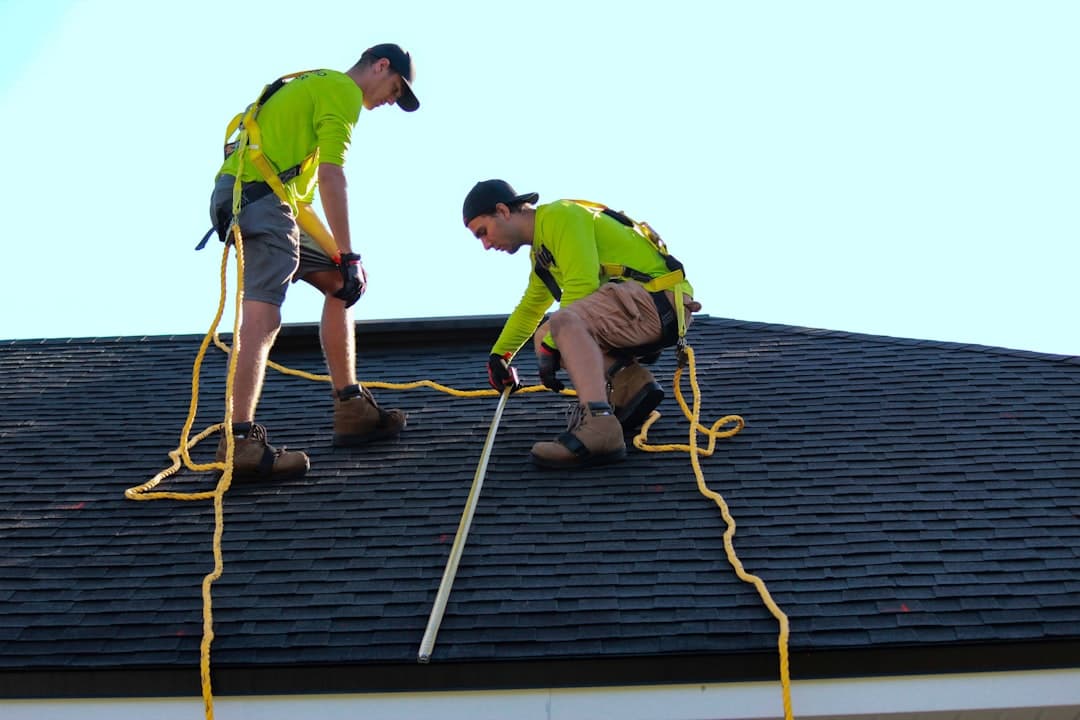
Roofing website design is the practice of building a fast, visual, trust-driven site that turns local homeowners and storm-affected searchers into booked inspections and quotes. Strong roofing sites lead with before-and-after photos, financing and warranty details, real reviews, and a frictionless path to request a free estimate on any device.
Key Takeaways
- Roofing is a high-consideration, high-ticket purchase, so the site must prove quality with strong visuals and social proof.
- Free inspection or estimate offers are the primary conversion mechanism and should appear on every page.
- Service pages by roof type and material, plus city pages, capture the specific searches homeowners run.
- Financing options, warranties, and licensing reduce hesitation on a large, infrequent purchase.
- Framer delivers fast, image-rich sites that load quickly even with heavy project galleries.
Why Roofing Website Design Stands Apart
A roof is one of the largest single purchases a homeowner makes, often costing as much as a used car. That single fact reshapes how the website has to work. Unlike a quick service call, a roofing decision involves research, comparison, and real anxiety about spending a large sum on something most people do not understand. The site’s job is to reduce that anxiety and make the company feel like the safe, obvious choice.
Because the purchase is visual and expensive, proof matters more than persuasion. Homeowners want to see the quality of your work, hear from people like them, and understand what protects them after the job is done. A roofing site that leads with sharp before-and-after photography, clear warranties, and verified reviews will outperform one that leans on slogans.
There is also a timing dimension. After a storm, searches spike and homeowners move fast, often dealing with insurance. A roofing site has to serve both the patient researcher planning a replacement and the urgent homeowner with visible damage, and it has to do both without confusing either.
The High-Ticket Mindset
People spending five figures do not call on impulse. They gather evidence, compare two or three companies, and look for reasons to trust or rule out each one. Your site is where most of that judgment happens. Every photo, review, and credential either builds confidence or leaves a gap a competitor fills. Designing for this mindset means front-loading proof and making the next step, usually a free inspection, effortless.
The Pages a Roofing Site Needs
A clear structure lets you capture the full range of roofing searches and guide each visitor to a quote. Build out these core pages and expand by material and location from there.
- Home: A hero with strong roofing imagery, your offer, service area, and a free estimate call to action.
- Services: Roof replacement, repair, inspection, and storm damage as distinct pages.
- Roof types and materials: Asphalt shingle, metal, tile, and flat roofing pages for material-specific searches.
- Project gallery: Before-and-after photos organized by project, the heart of a roofing site.
- Financing: A page explaining payment options, since cost is the biggest barrier.
- Service areas: City and neighborhood pages for local search.
- Reviews and about: Social proof, licensing, insurance, and your story.
Organizing pages around what buyers actually research is a discipline that applies across high-trust industries. The way we approach healthcare website design shows how to build credibility-first architecture for purchases where trust and risk are central, and roofing shares that same need to reassure before it sells.
Lead With Visuals and Proof
Roofing is a before-and-after business. Nothing sells your competence like a clear gallery of real projects, ideally with the same home shown old and new. Invest in good photography and organize it so a visitor can quickly find work similar to their own roof. A strong gallery does more to convert than any amount of descriptive copy.
Surround that visual proof with trust signals. Display recent reviews with star ratings near the top of the page. State your license, insurance, and any manufacturer certifications, which often unlock better warranties. Show logos of the shingle or material brands you install. Each element answers a quiet question in the homeowner’s mind and moves them closer to requesting an estimate.
Make the Offer Obvious
The free inspection or free estimate is the engine of roofing lead generation. It lowers the barrier to a first conversation and lets your team win the job in person. That offer should appear in the hero, repeat throughout the site, and anchor a simple form. Keep the form short: name, address, phone, and a line about the issue. Every extra field costs you leads on a decision people are already nervous about.
Address Cost and Financing Head On
Cost is the single biggest reason homeowners hesitate on a roof. Pretending it does not exist pushes people to competitors who address it. A dedicated financing page that explains payment plans, monthly options, and insurance claim support turns a barrier into a reason to call. You do not need to publish exact prices, but you do need to show that the investment is manageable and that you will help navigate it.
This transparency pairs naturally with strong warranty messaging. Explain the difference between workmanship warranties and manufacturer warranties, and what each covers. Homeowners spending heavily want to know they are protected for years. Making this clear on the site, rather than waiting for the sales visit, builds trust earlier in the journey.
Service and Location Pages for Roofing Search
Roofing searches are specific. People look for “metal roof installation,” “roof repair” plus a city, or “storm damage roof inspection.” A single services page cannot rank for all of that. The answer is dedicated pages for each service, each material, and each location you cover.
On every service page, explain the work, the signs a homeowner notices, your process, warranty and financing context, and the next step. Material pages should cover lifespan, look, and cost trade-offs so homeowners can self-educate. Then build city pages tailored to each area you serve. Producing this many pages goes more smoothly with a clear plan, which is often the deciding factor in whether a roofing site gets finished or stalls. If your current site is dated or underperforming, our approach to a website redesign shows how to rebuild structure and content systematically rather than patching a tired template.
Local SEO and Reputation
Your website works alongside your Google Business Profile, directory listings, and review platforms. Keep your name, address, and phone identical across all of them. Embed a service area map and list the cities you cover. Actively encourage happy customers to leave reviews, because in a high-ticket trade, the volume and recency of reviews strongly influence both rankings and the homeowner’s choice.
Why Framer Works for Roofing Companies
Roofing sites are image-heavy by nature, and that is exactly where many platforms slow to a crawl. Framer handles performance well, so a gallery-rich site still loads fast on mobile. That matters because storm-driven searchers and impatient researchers both abandon slow pages quickly.
Framer also frees a roofing business from the maintenance treadmill. There are no plugins to update, no security patches to chase, and no risk of an automatic update breaking the gallery. The site stays fast and stable while your team focuses on jobs, not technology. Updating financing details, adding new project photos, or changing service areas is straightforward, which keeps the site current as the business grows.
The conversion elements that drive roofing leads, prominent estimate forms, sticky call buttons, and clean galleries, are all easy to build in Framer. The platform handles speed automatically, so the design serves the offer instead of fighting load times. For a high-ticket business where every quote request is valuable, that reliability and speed directly protect your lead flow. The same performance-first principles we apply when building conversion-focused sites for technical companies, covered in our AI company website design guide, carry over cleanly to a roofing brand that needs every gallery view to end in an estimate request.
Roofing Website Mistakes to Avoid
A few common errors quietly suppress roofing leads. Avoiding them keeps your pipeline full.
- Weak or missing galleries: Without strong before-and-after photos, you have not proven your work.
- Hiding the offer: The free estimate should be visible everywhere, not tucked away.
- Ignoring cost: No financing information pushes price-anxious homeowners to competitors.
- One generic services page: It cannot rank for material and location-specific searches.
- Slow, heavy pages: Image-rich sites that are not optimized lose mobile visitors fast.
- No storm or insurance guidance: Storm-driven searchers need to know you handle claims.
Your Roofing Website Checklist
Run through this list to commission a new roofing site or audit an existing one. It captures what consistently turns roofing traffic into booked inspections.
- A strong, organized before-and-after project gallery.
- Free inspection or estimate offer in the hero and repeated site-wide.
- A short estimate form requesting only essential details.
- A dedicated financing page addressing cost and payment options.
- Clear warranty, licensing, and insurance messaging.
- Service pages for replacement, repair, inspection, and storm damage.
- Material pages for shingle, metal, tile, and flat roofing.
- City-level service area pages.
- Recent reviews displayed prominently.
- Fast mobile load times despite heavy imagery.
Cover each item and your site will do its real job: turning anxious, high-intent homeowners into estimate requests and signed roofing contracts.
Ready for a roofing website that converts high-ticket visitors into booked inspections? Talk to our team and we will build a fast, visual Framer site designed around your best projects, your offer, and how homeowners in your area search.
Frequently Asked Questions
What makes a good roofing company website?
A good roofing website leads with a strong before-and-after gallery, makes a free inspection or estimate offer impossible to miss, addresses cost through a financing page, and displays reviews, warranties, and licensing prominently. It also loads fast on mobile despite heavy imagery and includes dedicated service, material, and city pages to capture specific searches.
How do roofing companies generate leads online?
Roofing companies generate leads by offering a free inspection or estimate as the central call to action, building service and location pages that match specific searches, showcasing real project photos and reviews, and addressing cost openly with financing details. Pairing the site with a consistent Google Business Profile and active review generation amplifies local visibility and quote requests.
Why use Framer for a roofing website?
Framer handles performance well, so a photo-heavy roofing gallery still loads quickly on mobile, which matters for storm-driven and impatient searchers. It also removes plugin maintenance, security patching, and update risk, keeping the site fast and stable while making it easy to add new project photos or update financing and service area details over time.