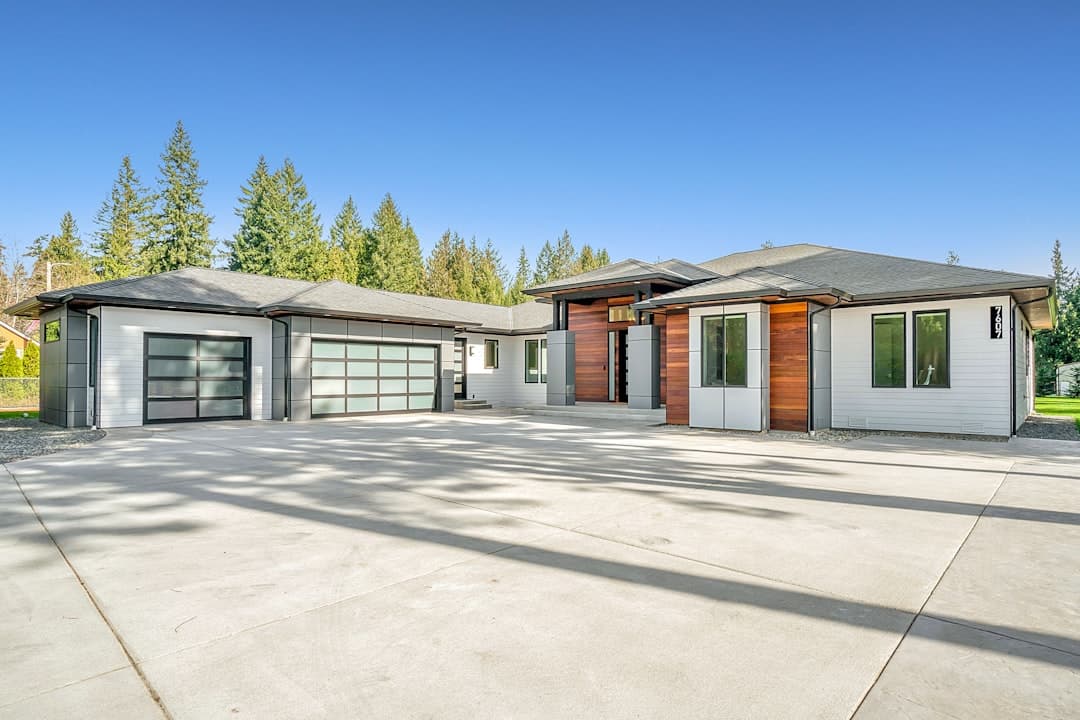
A great residential real estate website design combines high-resolution property imagery, intuitive search functionality, neighborhood guides, and clear agent profiles. It loads in under three seconds, displays beautifully on mobile devices, and converts visitors into showings through prominent CTAs, virtual tours, and lead-capture forms tied directly to your CRM.
What Makes a Great Residential Real Estate Website
Residential real estate buyers do extensive online research before contacting an agent. Studies from the National Association of Realtors show that more than 95 percent of home buyers begin their search online, and most spend weeks browsing listings before reaching out. Your website is the first impression, the filter, and often the deciding factor between a call and a click away.
A great residential real estate website design accomplishes three things at once. It showcases inventory with visual impact, builds trust in the agent or brokerage, and removes every possible friction point between a curious visitor and a scheduled showing. Sites that fail at any one of these three pillars lose buyers to competitors who do them all well.
The best residential sites borrow design language from luxury hospitality and editorial publications. Generous white space, large hero imagery, careful typography, and minimal navigation chrome let the properties speak. Visit any top-performing brokerage site and you will notice the photography is given room to breathe, not crammed between widgets and pop-ups.
Essential Pages and Features for Residential Real Estate
Every residential real estate website needs a core set of pages and features. Listings pages are non-negotiable, with both grid and map views, advanced filters for price, beds, baths, square footage, lot size, and neighborhood. Individual property detail pages should include image galleries, video tours, floor plans, school information, walkability scores, and a contact form keyed to the specific listing.
Beyond listings, your site needs neighborhood guides, agent bio pages, a buyer’s resources hub, a seller’s resources hub, recent sold properties, testimonials, and a press or media section if the brokerage has been featured. A blog or market updates section helps with SEO and positions the agent as an expert.
Features that separate great sites from mediocre ones include saved searches with email alerts, favoriting and shareable lists, mortgage calculators, MLS or IDX integration with daily feed updates, and integrations with tools like Salesforce, HubSpot, or a specialized real estate CRM such as Follow Up Boss.
Design Principles for Residential Real Estate Sites
Trust is the dominant design challenge. Buyers and sellers are making the largest financial decision of their lives, and they need to feel safe with the agent or firm before they pick up the phone. Design choices that build trust include professional photography of the agent and team, prominent display of credentials and awards, integration with verified review platforms like Zillow and Google, and clear physical office addresses.
Conversion design is the other half of the equation. CTAs need to appear above the fold on every page, contact forms should never ask for more than five fields, and chat widgets should be staffed during business hours rather than left as unanswered AI experiments. For deeper guidance on conversion, our website conversion rate guide walks through the full optimization playbook.
Accessibility cannot be an afterthought. Many residential buyers are older, and meeting WCAG 2.1 AA standards expands the audience while protecting the brokerage from compliance risk. This means proper color contrast, keyboard navigation, alt text on every property image, and clear focus states on interactive elements.
Content Strategy for Residential Real Estate
Content is the engine that drives organic traffic to a residential real estate site. The most valuable content categories are neighborhood guides, market reports, buyer and seller checklists, and answers to common questions about closing costs, contingencies, and inspections. Each piece should target a specific local search query.
Neighborhood guides deserve special attention. A great neighborhood guide includes demographic data, school ratings, average sale prices, time on market trends, a walking tour video, photos of local landmarks, and embedded maps showing schools, parks, restaurants, and transit. These pages rank well, build authority, and give the agent a reason to be quoted in local press.
Copy throughout the site should sound like a human, not a corporate brochure. Specific neighborhood references, named schools, named local businesses, and the agent’s personal voice all signal authenticity. Generic phrases like “award-winning service” and “unparalleled expertise” are skipped over by readers and ignored by search engines.
Conversion Optimization for Real Estate Sites
The fundamental conversion goal on a residential site is a showing request or a valuation request. Every page should have a primary CTA that leads to one of these outcomes. Secondary CTAs include newsletter signups, downloadable buyer guides, and saved-search registrations, all of which feed the email list.
Forms are where most sites lose leads. The shortest path to conversion is name, email, phone, and a single open field. Multi-step forms can outperform single-page forms when the first step is low-commitment, but every additional required field decreases completion by roughly 10 percent. Our guide to CTA button design covers the visual and copy details that drive clicks.
Speed matters more on real estate sites than almost any other vertical because property images are heavy. Lazy loading, modern image formats like AVIF and WebP, and a CDN are mandatory. Sites built on Framer benefit from built-in image optimization and a global edge network, which means listings load fast even with dozens of high-resolution photos.
SEO Considerations for Residential Real Estate
Local SEO is the foundation. Every agent or brokerage should claim and optimize their Google Business Profile, build citations across major directories, and earn reviews on Google and Zillow. On-site, schema markup for RealEstateAgent, RealEstateListing, and FAQPage helps search engines understand the content.
City and neighborhood pages are where most residential sites win or lose the SEO battle. A site that has 30 neighborhood guides for the metros it serves will outrank a site with one generic “Areas We Serve” page every time. Each neighborhood page should be at least 1,000 words, include unique photography, and link out to relevant listings.
Backlinks from local press, neighborhood associations, school PTAs, and community organizations are some of the most valuable in real estate SEO. Sponsoring a local event or contributing a market column to a neighborhood publication often returns more SEO value than a paid backlink campaign.
Common Mistakes to Avoid
The biggest mistake is using a templated IDX site that looks identical to every other agent in the market. Buyers cannot tell agents apart when the sites are clones, and the only differentiator becomes price. Custom design, even at a modest budget, is the single largest predictor of perceived agent quality.
The second mistake is hiding contact information. Phone numbers, email addresses, and office locations should appear in the header, footer, and on dedicated contact pages. Sites that bury contact info behind contact forms lose buyers who want to call right now.
The third mistake is neglecting mobile. More than 70 percent of residential real estate traffic is mobile, yet many sites are designed desktop-first and then squeezed onto phones. Mobile-first design means thumb-friendly buttons, single-column layouts, sticky CTAs, and forms that work with autofill.
How Framer Fits Residential Real Estate
Framer is purpose-built for the visual-heavy, performance-critical sites that residential real estate demands. The platform delivers sub-second load times, native image optimization, and a CMS flexible enough to handle listings, neighborhoods, agents, and blog content from one interface. For a deeper look at the platform, see our Framer website design guide.
The breakpoint editor in Framer makes mobile-first design genuinely easy, not a compromise. Built-in animations and scroll effects give listings the cinematic feel of luxury hospitality sites without custom development. And the integrations with Mailchimp, HubSpot, and Zapier let lead flow connect directly to whatever CRM the brokerage already uses. If you want to see what is possible, get in touch for a consultation.
Frequently Asked Questions
How much does a residential real estate website cost?
A professionally designed residential real estate website typically ranges from 5,000 to 25,000 dollars for design and build, plus ongoing hosting and IDX feed fees of 50 to 300 dollars per month. Custom Framer builds often land in the lower half of that range because the platform reduces development time significantly compared to WordPress.
Do I need IDX integration on my real estate website?
If you want visitors to search active MLS listings on your site, yes. IDX is what makes that legally possible. Most agents work with a third-party IDX provider that pulls the MLS feed and styles it to match the rest of the site.
What platform is best for a real estate website?
Framer, Webflow, and WordPress are the three main contenders. Framer wins on design quality and speed. Webflow offers more customization for development-heavy projects. WordPress remains popular for IDX-heavy sites with deep plugin requirements, though it requires more maintenance.
How long does it take to launch a real estate website?
A custom residential real estate website typically takes four to eight weeks from kickoff to launch. Migrating an existing site or building on a template can compress that to two or three weeks. IDX integration often adds one to two weeks depending on the provider.
Should agents have their own websites or use the brokerage site?
Both. The brokerage site builds the brand, but individual agent sites let agents own their leads and personal brand. Most top-producing agents maintain their own site in addition to a profile on the brokerage page.