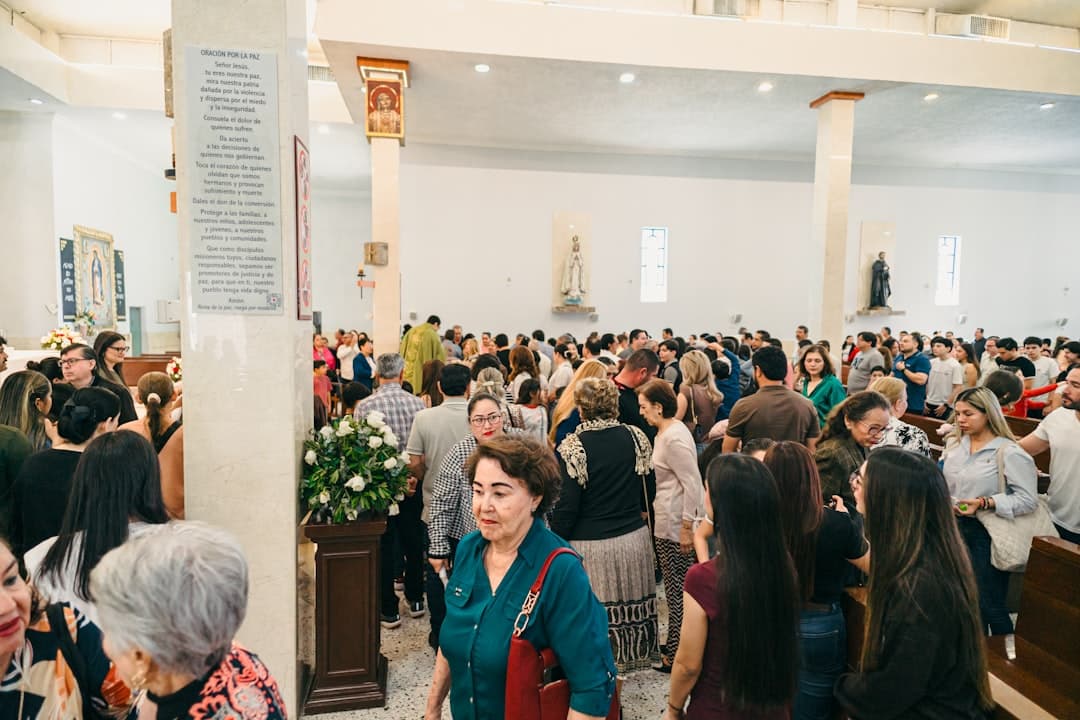
A religious organization website welcomes new visitors, serves existing members, and surfaces the practical information faith communities need: service times, sermons, ministries, online giving, and events. The best designs feel warm and human, load fast on mobile, and make it easy for a first-time guest to plan their visit before they ever walk through the door.
Why Religious Organizations Need Purpose-Built Websites
A church, mosque, synagogue, or temple website is not a marketing brochure. It is the digital front door to a spiritual community. Most first-time visitors check the website before attending in person. They want to know what time service starts, what to expect when they arrive, what to wear, where to park, and whether there is a program for their kids. If the website cannot answer those questions in under thirty seconds, they often pick a different community.
Beyond visitor experience, the website serves existing members. It is where they find sermon recordings, sign their family up for retreats, register for a small group, give online, and stay connected when they cannot attend in person. A well-designed religious organization website does both jobs without confusing either audience.
Core Pages Every Faith Community Website Needs
Service Times Front and Center
Service times should be visible above the fold on the homepage, ideally in the header or hero section. Include the day, the time, the address, and a link for directions. If you offer multiple services or a livestream option, list each one. A surprising number of faith community websites bury service times three clicks deep. Do not be one of them. For background on hero design that surfaces this kind of information immediately, see this hero section design guide.
New Visitor Welcome Flow
A dedicated “I am New” or “Plan Your Visit” page is the single highest-impact page on a faith community website. It should answer the questions every first-timer is too shy to ask: what is the dress code, will I be singled out, how long is the service, is there childcare, where do I sit, can I just observe? Use warm photography of real people, written in plain language, not religious jargon. End with a small commitment, like a contact form for a brief introduction or a simple registration so a host can greet them at the door.
Sermon and Teaching Archives
Sermon archives are the single most-visited section of most religious organization websites. Members come back for them weekly. New visitors use them to evaluate the community before attending. Make recordings easy to browse by date, speaker, series, and scripture reference. Embed audio and video directly so people can listen without downloading anything. Add a podcast feed, since many members listen on the commute. Include written notes or transcripts when possible for accessibility and search engine optimization.
Ministries, Groups, and Programs
Ministry pages explain how members get involved beyond Sunday morning. Each ministry should have its own page with a clear description, a meeting schedule, a contact person, and a sign-up form. Avoid the temptation to list twenty ministries on a single page. Each one deserves its own URL so it can be shared, indexed by search engines, and updated independently.
Events Calendar and Registration
An events calendar handles retreats, classes, holiday services, community service days, and recurring weekly programs. Members should be able to filter by category, see upcoming events on the homepage, and register or RSVP without leaving the site. For larger events, embed a registration system that handles payment, dietary restrictions, and waivers.
Online Giving That Actually Converts
Online giving is now the dominant channel for most faith communities. The giving page should feel as effortless as buying a book online. Pre-filled common amounts, a recurring option, multiple payment methods including digital wallets, and clear designation choices for funds and ministries. Avoid asking people to create an account before they give. The single biggest mistake religious organization websites make is treating giving like a forms exercise instead of a generosity moment. Use warm, brief copy that connects the gift to impact, not transaction language.
Consider a recurring giving option as the default, since recurring givers contribute roughly twice as much annually as one-time donors. Include a confirmation screen that thanks the giver personally and tells them what their gift makes possible. Many religious organization websites benefit from the same conversion patterns that work for nonprofits more broadly, so reviewing the nonprofit website design guide is a good complement.
Livestream and Podcast Integration
Livestreaming is no longer optional. A meaningful percentage of every congregation watches services from home, on the road, or while caring for someone who cannot leave the house. The livestream page should be the easiest URL on the site to remember and reach. Embed YouTube or Vimeo directly, post the bulletin and song lyrics on the same page, and provide a chat or prayer request channel for remote participants.
Podcast integration follows the same logic. Submit your sermon feed to Apple Podcasts, Spotify, and YouTube. On the website, embed a recent-episodes player on the sermons page and on the homepage. The goal is to meet people where they listen, not force them to use a single proprietary system.
Design Principles That Set Faith Community Sites Apart
Warmth Over Slickness
The temptation to make a religious organization website look like a Silicon Valley software product should be resisted. Communities are built by humans, and the website should feel that way. Use real photography of real members, not stock images. Use natural language, not corporate phrasing. Use color palettes that feel inviting rather than cold and minimalist.
Mobile-First, Always
The majority of new visitors land on a faith community website from a mobile device, often in the car five minutes before deciding which service to attend. The mobile experience must be excellent: fast load times, large tap targets, service times immediately visible, and the directions link working with a single tap. A mobile-first design approach is the only sensible default.
Accessibility for All
Faith communities serve people of every age and ability. The website must be accessible: high color contrast, real text rather than text in images, captions on every video, screen-reader-friendly navigation, and the ability to scale text without breaking layouts. This is both an ethical obligation and a practical one, since older members and those with vision or hearing differences are often the most engaged participants in a community.
Technology Choices for Religious Organization Websites
Modern website builders make it possible to launch a polished faith community website without writing code. Framer is a strong fit for organizations that want a designed, distinctive site without the maintenance overhead of WordPress. Squarespace works well for smaller communities. WordPress remains a solid choice for larger organizations with active content teams and complex membership databases. For organizations weighing options, the best website builder for business guide compares the major platforms.
Whichever platform you choose, plan integrations with the systems you already use: church management software, donation processing, email marketing, and event registration. The website should pull from those systems rather than duplicate data, otherwise the staff who maintain it will fall behind within a few months. If your community serves nonprofit causes alongside its core mission, the patterns at framerwebsites.com/industries/nonprofit apply directly.
Content That Builds Belonging
Beyond the functional pages, the most engaging religious organization websites publish content that builds belonging. Member stories, ministry highlights, mission trip recaps, and pastoral reflections all signal that this community is alive. A blog or news section, updated even once a month, communicates more about the health of a community than the most polished mission statement ever could.
Photo galleries from recent services, retreats, and community events serve the same purpose. Be respectful and ask permission, especially when children are pictured, but do show the community as it actually is.
Common Mistakes to Avoid
The most common religious organization website mistakes fall into a few categories. Buried service times, generic stock photography that does not show the actual community, sermon archives hidden behind logins, donation forms that require account creation, broken livestream links from the previous Sunday, and contact forms that do not specify who reads them. Each of these signals to a first-time visitor that the community has not thought carefully about welcoming them.
Another frequent mistake is overcomplicating navigation. A faith community website should rarely need more than six top-level menu items: About, Plan a Visit, Sermons, Ministries, Events, and Give. Everything else can live in the footer or as sub-pages.
Frequently Asked Questions
How much does a religious organization website cost?
A polished religious organization website typically costs between three thousand and fifteen thousand dollars for design and build, depending on scope, with ongoing platform and hosting fees of fifteen to fifty dollars per month. Larger communities with custom membership databases, integrated giving, and live production can spend twenty thousand or more. Many communities save significantly by using a modern website builder and a designer who specializes in faith community sites.
What is the most important page on a church website?
The “Plan Your Visit” or “I am New” page is consistently the highest-impact page on a faith community website. It is the page that turns curious online visitors into in-person attendees. Service times, address, what to expect, childcare details, and a low-friction welcome contact form should all live here.
Should we use a custom site or a website builder?
For most religious organizations, a modern website builder like Framer or Squarespace is the right choice. Custom development is rarely justified by the requirements and creates long-term maintenance burden when the original developer leaves. A website builder lets staff and volunteers update content without technical help.
How do we handle online giving on the website?
Embed a giving form directly on the website using a service like Tithe.ly, Pushpay, Stripe, or a denominational platform. Avoid sending givers to a third-party site that breaks the visual experience. Default to recurring giving as the primary option, accept digital wallets, and never require account creation before a first gift.
How often should we update the website?
Service times, events, and sermon archives should be current within twenty-four hours. Ministry pages, staff bios, and core content should be reviewed quarterly. A monthly cadence for new content, whether a blog post, a member story, or a ministry highlight, signals to search engines and visitors that the community is active.