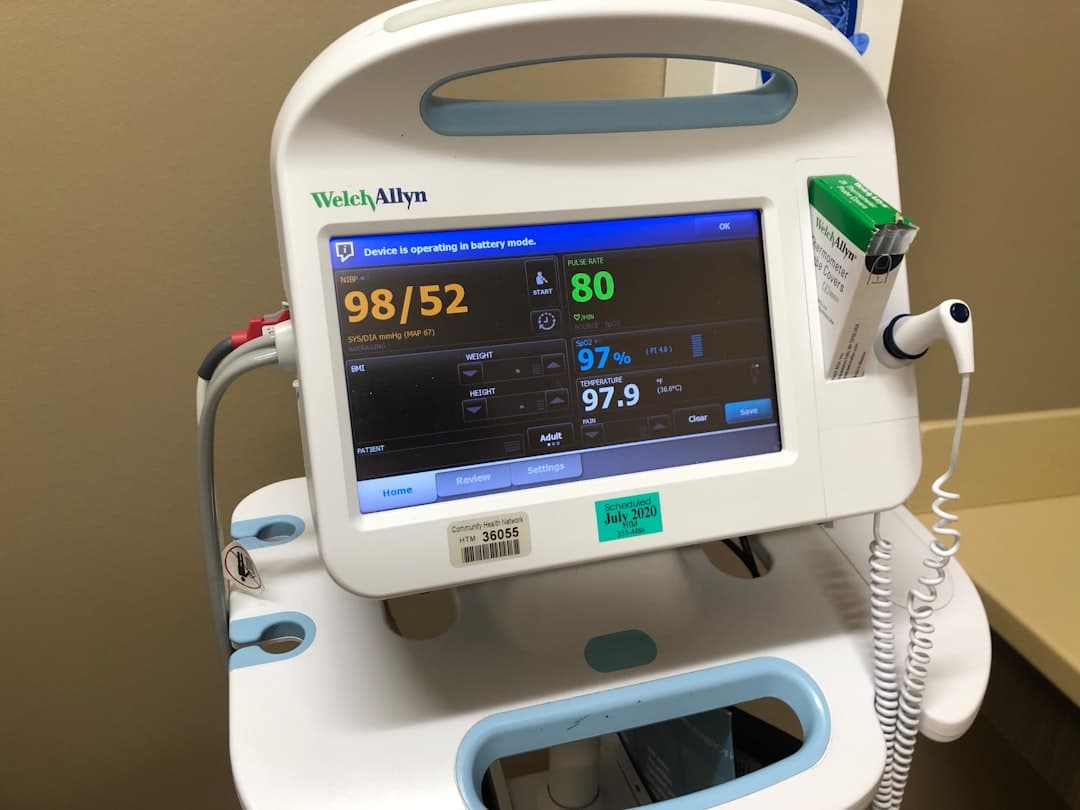
Medical devices website design must serve three distinct audiences without diluting any of them: clinicians evaluating clinical evidence, distributors and procurement teams managing the buying process, and patients or caregivers researching a device. The pattern that wins combines regulatory clarity, evidence-backed product pages, audience routing, and a serious editorial aesthetic that respects the gravity of the work.
Why medical devices websites have higher stakes
A medical device website is not a marketing site in the consumer-software sense. It is a public-facing extension of a regulated product. The FDA, EMA, MHRA, and equivalent agencies in other jurisdictions all monitor what device manufacturers say in public marketing. Off-label claims, missing risk disclosure, and overstated efficacy can trigger warning letters, recalls, or legal exposure.
That regulatory gravity changes design decisions. Copy is reviewed by regulatory affairs, not just marketing. Visuals must not imply uses or outcomes that fall outside the approved indication. Risk information must be accessible, not buried. The visual language of medical devices leans serious, evidence-rich, and authoritative because the substance demands it.
Regulatory clarity above the fold
The hero section of a medical device website carries a different responsibility than a consumer SaaS hero. It must communicate what the device is, who it is for, and what regulatory clearance it carries. The pattern that works combines a product-anchored headline, a clear indication-for-use statement, and visible regulatory clearance markers (510(k) cleared, CE Mark, PMA approved, FDA registered).
The indication-for-use line
Every device page should carry the approved indication-for-use language somewhere visible. This is the FDA-cleared description of what the device is intended to do, for which patient population, in which care setting. It is not marketing copy. It is the legal scope of your product.
The strongest sites place a brief indication-for-use statement under the hero, with a link to the full prescribing information or instructions for use. This protects you from off-label-promotion exposure and signals to clinicians that you understand the regulatory framework.
Clearance and certification badges
FDA 510(k), CE Mark, ISO 13485 (quality management), and ISO 14971 (risk management) certifications are trust signals for clinicians, hospital procurement, and international distributors. Display them visibly. Link each badge to the underlying documentation when possible. Buyers in regulated environments expect this transparency.
Audience segmentation: HCP, patient, distributor
A medical device serves at least three audiences with different information needs. Healthcare professionals (HCPs) want clinical evidence, dosing protocols, and integration with care pathways. Patients want to understand whether the device is right for their condition, how it works, and how to access it. Distributors and procurement want product specifications, regulatory documentation, and ordering pathways.
The pattern that works is explicit audience routing in the navigation. A “For HCPs,” “For Patients,” “For Distributors” navigation block sends each audience to a tailored content track. Each track repeats the homepage architecture (hero, evidence, product details, contact) with copy and visuals tuned to that audience.
HCP gating
In some jurisdictions and for some product classes, HCP-only content must be gated behind a credential check. Prescription devices, controlled drugs, and certain in-vitro diagnostics fall into this bucket. The gating pattern is usually a simple “Confirm you are a healthcare professional” interstitial, sometimes paired with NPI lookup or self-attestation. Check with your regulatory affairs team on what your jurisdiction requires.
Clinical evidence and study citations
Clinicians evaluate devices through the lens of clinical evidence. A product page without published studies, comparative trials, or registry data reads as unproven. The strongest medical device sites lead the evidence section with three to five flagship studies: the title, the journal, the publication year, the primary endpoint, and the result.
Link each citation to the abstract or full text on PubMed, the journal website, or your own evidence library. Studies behind paywalls should still be cited with full bibliographic information. Conference posters from major societies (HIMSS, RSNA, AHA, ASCO) also count as evidence and signal active engagement with the clinical community.
Real-world evidence (RWE) and post-market surveillance data are increasingly important. If you have registry data, IRB-approved RWE studies, or large multi-center deployments, feature them prominently. Buyers want to see how the device performs in clinical practice, not just in controlled trials.
Product specifications and indications
Distributors, procurement, and biomedical engineering teams need detailed product specifications. The product page should include dimensions, weight, power requirements, compatibility, accessories, consumables, service intervals, and full indication-for-use language. Tables work better than paragraphs for this content.
The strongest sites also publish a downloadable spec sheet (PDF) and a downloadable IFU (instructions for use) for buyers who need to share documentation internally. This shortens the procurement cycle and reduces support load.
For broader healthcare-vertical patterns that apply to providers and care delivery sites, the healthcare website design guide covers the patient-facing and provider-facing architecture in depth.
Distributor portals
If you sell through distributors (most class II and class III medical devices), a distributor portal becomes a key part of the site architecture. The portal typically requires authentication and hosts pricing, ordering pathways, marketing collateral, training materials, and regulatory documentation specific to each distributor’s territory.
The portal does not need to be a complex commerce system in most cases. A protected section of the marketing site with PDF downloads, training videos, and a clear point-of-contact for each region usually does the job. The signal you want to send: “we make it easy to sell our device in your market.”
Visual aesthetic: serious and clinical
Medical device visual design has a narrow band of acceptable aesthetics. Too clinical (fluorescent lighting, sterile white, beige) reads as outdated. Too consumer (soft pastels, lifestyle photography, casual typography) reads as unserious. The pattern that works is editorial seriousness: high-contrast photography of clinicians in real care settings, restrained typography, and a color palette that signals trust without being cold.
Photography should reflect the actual clinical environment. Stock photos of unrealistically pristine hospitals or models pretending to be doctors hurt credibility. If budget allows, commission real photography in real care settings with real clinicians. If not, license editorial-quality healthcare photography from sources that specialize in the category.
Risk information and safety messaging
Every device has known risks, contraindications, and warnings. The FDA expects this information to be accessible, not buried. The pattern that works is a “safety information” link in the global footer, linking to a dedicated risk page that lists indications, contraindications, warnings, precautions, and adverse events.
For specific marketing claims, paired risk information should appear in the same scroll. If your homepage hero claims a clinical benefit, the supporting safety language should be reachable in the same screen, either inline or via a tooltip. This protects you from fair-balance violations and signals integrity to clinicians.
Where Framer fits for medical devices
Framer suits medical device sites that need to ship a credible, regulated marketing presence without a lengthy agency engagement. The component model handles repeated patterns (clinical evidence cards, regulatory badges, indication blocks) cleanly. The CMS handles study citations, press releases, and case studies.
For new device launches or established manufacturers rebuilding outdated marketing sites, Framer compresses the build cycle from months to weeks while still supporting the editorial seriousness the category demands. See framerwebsites.com/industries/healthcare for healthcare-specific design system and conversion patterns.
For deeper coverage of the patient-facing and clinic-facing architecture that often pairs with device manufacturer sites, see the best healthcare website design roundup.
Frequently Asked Questions
What is the most important section on a medical device website?
The combination of indication-for-use clarity above the fold and clinical evidence in the body. Clinicians evaluate devices on regulatory scope and published evidence first, before any marketing message. A site without visible clearance markers and without cited studies reads as unproven.
Should medical device sites segment content by audience?
Yes. HCPs, patients, and distributors have very different information needs. The pattern that works is an audience-routed navigation (For HCPs, For Patients, For Distributors) sending each audience to a tailored content track. Trying to fit all three on a single homepage produces vague copy.
Do we need to gate HCP content?
Sometimes. For prescription devices and certain controlled-product categories, HCP-only content must be gated behind a credential check or self-attestation. Check with your regulatory affairs team on jurisdiction-specific requirements. A simple “Confirm you are a healthcare professional” interstitial is the standard pattern.
How should we handle risk information and adverse events?
Make it accessible, not buried. A “Safety Information” link in the global footer pointing to a dedicated risk page is the minimum. For specific marketing claims, paired risk information should be reachable in the same screen, either inline or via tooltip. This protects you from fair-balance violations and signals integrity to clinicians.