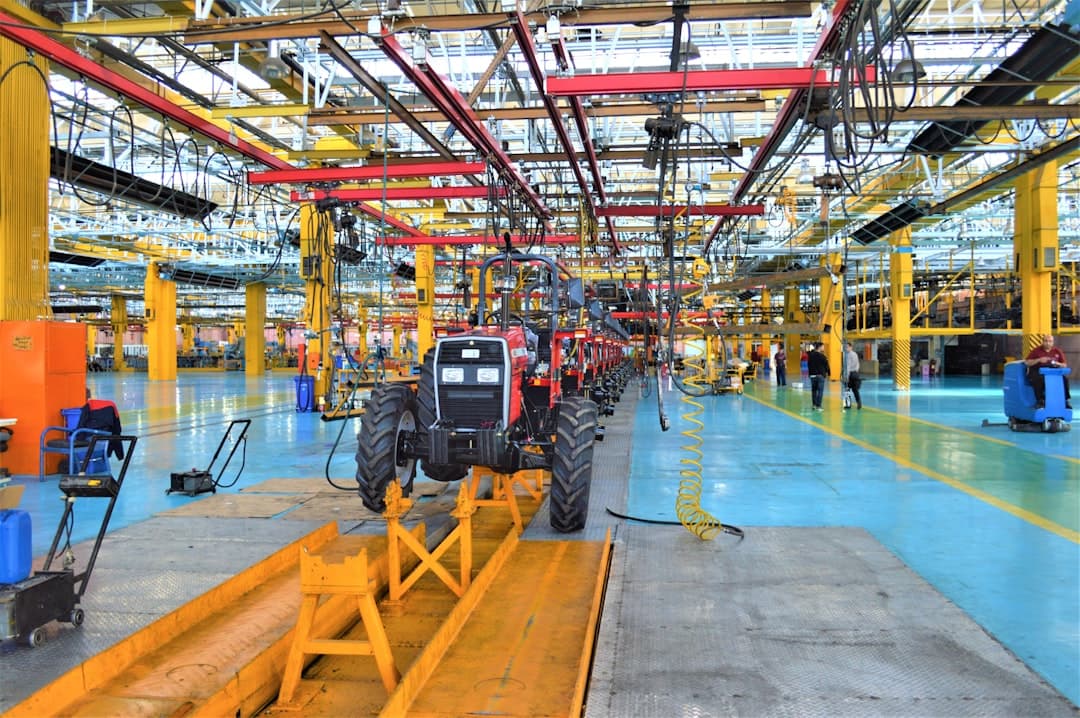
A great manufacturing website design proves engineering depth and production capability within seconds. It surfaces specific capabilities such as CNC machining, injection molding, sheet metal, and assembly, displays certifications like ISO 9001 and AS9100, names enterprise clients, shows real factory photography, and converts buyers through capability pages, transparent RFQ tools, and direct paths to a production engineer conversation.
What Makes a Great Manufacturing Website
Manufacturing buyers are exacting. Procurement teams, engineering managers, and supply chain leads evaluate suppliers based on capability, capacity, quality systems, and lead times. A great manufacturing website design surfaces all four within the first scroll and lets serious evaluators drill into specifics within a click or two.
The capability test comes first. Buyers want to know exactly what the manufacturer can produce. Machining tolerances, available materials, maximum part sizes, production volumes, and finishing options all need to be explicit. A site that says “precision manufacturing” without specifics loses to a competitor that opens with “plus or minus 0.0005 inch tolerance on five-axis CNC across stainless, aluminum, titanium, and Inconel.”
The quality test comes second. Manufacturing buyers care about quality systems because a failed part can stop a production line. ISO 9001, AS9100 for aerospace, IATF 16949 for automotive, ISO 13485 for medical, and FDA registration where applicable all need to be visible. Our broader B2B website design guide covers the foundational patterns that apply across operational categories.
Essential Pages and Features for Manufacturing
The page architecture mirrors the buyer’s evaluation process. The homepage frames the company’s capabilities and quality positioning. A capabilities section breaks the work into named processes such as CNC machining, injection molding, sheet metal fabrication, additive manufacturing, and assembly. An industries section shows vertical expertise in aerospace, automotive, medical devices, or industrial equipment.
Beyond core pages, manufacturing sites benefit from an RFQ tool, a capabilities calculator, a materials reference library, and a customer portal for order tracking. The RFQ tool is table stakes for high-mix, low-volume manufacturers; buyers expect to upload a part file and get a response.
Capacity and equipment pages deserve attention. Each major capability should have a page with photos of the equipment, specifications, tolerances, certifications, and named industries served. These pages rank for capability-specific searches and signal operational depth to procurement teams.
Design Principles for Manufacturing Sites
Industrial visual language is the design tone. Manufacturing is a physical business, and the imagery should reflect that. Real photos of the shop floor, the equipment, finished parts, and quality inspection beat stock photography every time. The visual palette is typically anchored in steel gray, deep blue, and a brand accent color, with strong industrial typography.
Specification density matters. Manufacturing buyers respond to numbers. Tolerance ranges, material lists, part-size envelopes, and production volumes all carry more weight than copy describing the same information. Tables, spec sheets, and downloadable PDFs serve this audience well. Our visual hierarchy guide covers how to surface technical information without overwhelming the page.
Performance is important because manufacturing buyers often evaluate sites from the field, on mobile, on factory floors with limited connectivity. Modern stacks like Framer deliver sub-second load times and optimized images, which means the site works as well on a phone in a plant as on a desktop in a procurement office.
Content Strategy for Manufacturing
The content engine for manufacturing serves two audiences. The first is the buyer evaluating suppliers now, who needs deep capability pages, certification proof, and named case studies. The second is the design engineer earlier in the cycle, who needs technical content on materials, processes, and design for manufacturability.
The highest-leverage content formats are technical case studies with named parts and named industries, capability deep-dives such as “five-axis machining for medical device components,” design for manufacturability guides, and material selection references.
Voice should sound like a senior production engineer. Specific tolerances, specific processes, specific materials. Specificity is credibility in manufacturing. Generic phrases like “world-class manufacturing solutions” read as filler and signal that the company has not done the operational work to back the claim.
Conversion Optimization for Manufacturing
The primary conversion is an RFQ submission or a meeting with a production engineer. Forms should ask for company, role, industry, part details or file upload, volume, and timeline. The industry and volume fields let the company route inquiries to the right operational team and qualify leads before the call.
File upload is critical for RFQ tools. Buyers expect to upload CAD files, STEP files, or PDF drawings directly. A tool that requires emailing files separately loses conversions to competitors with integrated upload. Our landing page design best practices guide covers the patterns that move buyers from interest to action.
Response time is a major lever. Procurement teams running competitive RFQs expect a response within one to two business days. Sites that route to a generic inbox lose deals to faster-responding competitors. A named production engineer’s email or a clear ownership signal reduces friction significantly.
SEO Considerations for Manufacturing
SEO for manufacturing targets a mix of capability queries such as “CNC machining services [city],” material queries such as “titanium machining for aerospace,” and educational queries such as “design for additive manufacturing.” Each warrants a different content approach.
Location pages are critical for regional manufacturers. Each plant deserves a dedicated page with local schema, photos, capabilities, and named local industries served. These pages rank for local searches that often outperform generic national keywords.
Technical content is where manufacturers build long-term authority. Each major process, each major material, and each major industry vertical deserves a long-form guide. These guides rank for the searches that design engineers actually run during early-stage supplier discovery. For a deeper SEO playbook, see our Framer SEO guide.
Common Mistakes to Avoid
The most common mistake is over-claiming capability breadth. Manufacturing buyers are sophisticated and will quickly identify gaps between the marketing claim and the operational reality. The best sites are specific about what they do in-house and explicit about what they partner for.
The second mistake is hiding the production team. Manufacturing is a technical relationship business, and the named production engineers and quality leads should appear on the site with photos, names, capability expertise, and direct contact. Sites that route everything through a generic “Contact Sales” form lose to sites with named operational owners.
The third mistake is neglecting certifications. Quality certifications are the single largest trust signal in manufacturing, yet many sites bury them in the footer or hide them on an “About” page. Certifications belong in the header, on capability pages, and on every page where they apply.
How Framer Fits Manufacturing
Framer suits manufacturing because the design fidelity matches the seriousness of the buyer. The platform delivers industrial typography, restrained motion, and the speed that procurement and engineering buyers expect. The CMS handles a growing library of capabilities, locations, case studies, and technical content without involving engineering for routine updates.
The integrations with HubSpot, Salesforce, and Mailchimp mean lead capture flows to the existing CRM. Custom RFQ tools can connect via API to the company’s MES or ERP. To explore what is possible for a manufacturing company, get in touch for a tailored consultation.
Frequently Asked Questions
How much does a manufacturing website cost?
A regional contract manufacturer typically invests 25,000 to 75,000 dollars in a custom website. Larger manufacturers with multiple plants and complex RFQ flows spend 60,000 to 200,000 dollars or more. The right budget depends on the breadth of capabilities and the complexity of integrations.
Do manufacturing websites need RFQ tools?
For high-mix, low-volume manufacturers, yes. A self-serve RFQ tool with file upload removes friction and captures design engineers early in the cycle. For low-mix, high-volume contract manufacturers, RFQ tools are less critical than fast response from named engineers.
What certifications should appear on a manufacturing website?
At minimum, ISO 9001 if the company holds it. AS9100 for aerospace, IATF 16949 for automotive, ISO 13485 for medical, and FDA registration where applicable. Industry-specific certifications such as Nadcap for special processes carry significant weight.
What is the best platform for a manufacturing website?
Framer and Webflow are the leading choices for design-led manufacturing sites. Framer wins on speed and editorial design. Webflow offers more depth for very large content libraries. WordPress remains common at large manufacturers because of legacy systems integration but is rarely the best choice for a new site.