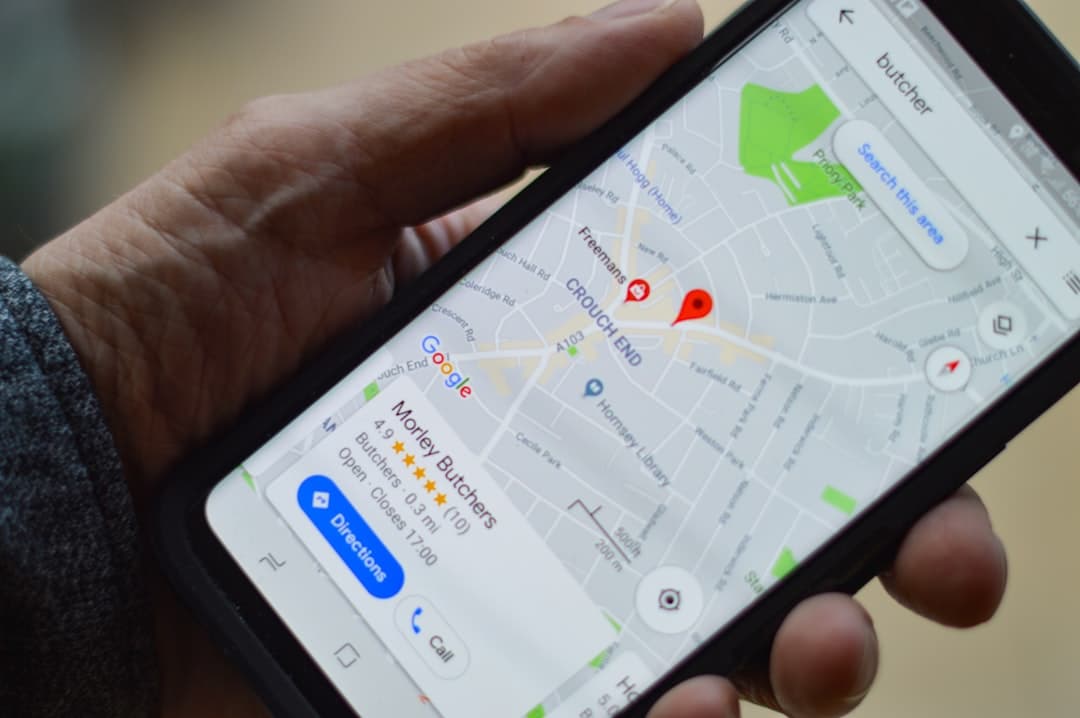
Local SEO is the practice of optimizing a business to appear in geographically relevant searches, like “plumber near me” or “best cafe in Denver.” It works by aligning your Google Business Profile, on-site location signals, citations, and reviews so search engines confidently match your business to nearby, ready-to-act customers.
What Local SEO Actually Is
Local SEO is the slice of search optimization focused on proximity and intent. When someone searches with local intent, Google assembles a different kind of results page: a map pack of three nearby businesses sits above the traditional blue links, and the ranking factors that drive it are partly distinct from ordinary organic SEO. For any business that serves customers in a physical area, this map pack is often the most valuable real estate on the internet.
The reason it matters so much is intent. A person searching “emergency electrician near me” is not browsing. They are ready to call. Ranking in local results puts you in front of demand at the exact moment it converts. For a service business or a brick-and-mortar shop, a strong local presence can outperform any paid channel on cost per customer.
Key Takeaways
- Local SEO targets searches with geographic intent and the map pack that sits above organic results.
- Your Google Business Profile is the single highest-leverage asset in local search.
- Consistent name, address, and phone details across the web build the trust that drives rankings.
- Reviews influence both ranking and the click decision, so a steady flow matters.
- Location-specific pages on a fast site capture city-level searches.
- Core Web Vitals and page speed feed into both local and organic visibility.
Google Business Profile: The Foundation
Your Google Business Profile is the centerpiece of local SEO. It is the listing that appears in the map pack and in Google Maps, and it is the first thing a local searcher interacts with. Claiming and fully optimizing it is the highest-return action you can take.
Complete Every Field
Fill out everything: business category, services, hours, attributes, service areas, and a genuine description. Google rewards complete profiles because they serve searchers better. Choose the most specific primary category that fits your business, then add relevant secondary categories. The primary category has an outsized effect on which searches you appear in.
Photos, Posts, and Q&A
Add real photos of your premises, team, and work. Profiles with quality images get more engagement, and engagement signals matter. Use Google Posts to share updates and offers, and monitor the questions section so you can answer prospective customers directly. An active profile beats a static one.
Keep Information Accurate
Wrong hours or an outdated phone number does measurable damage. A customer who drives to a closed shop leaves a bad review and never returns. Treat the profile as a living asset and update it whenever anything changes.
NAP Consistency and Citations
NAP stands for name, address, and phone number. Search engines cross-reference these details across the web to verify your business is real and to confirm its location. When your NAP is consistent everywhere it appears, that confidence translates into stronger rankings.
Audit Your Existing Listings
Inconsistencies accumulate over time: an old address on one directory, an abbreviated street name on another, a former phone number lingering somewhere. Audit the major business directories and data aggregators, then correct every discrepancy so the exact same NAP appears everywhere.
Build Relevant Citations
A citation is any online mention of your business details. Get listed in reputable general directories and, more importantly, in industry-specific and local directories relevant to your business. Quality and relevance matter more than sheer volume. A listing in a respected local chamber or trade association carries more weight than dozens of low-value directories.
Reviews: The Local Trust Engine
Reviews do double duty in local SEO. They influence ranking, and they heavily influence whether someone clicks your listing over a competitor’s. A business with a higher rating and a steady stream of recent reviews wins both the algorithm and the human.
- Ask every satisfied customer for a review, ideally with a direct link that makes it effortless.
- Respond to every review, positive and negative, in a professional and human tone.
- Keep reviews flowing steadily rather than in a single burst, which looks more natural.
- Address negative reviews calmly and publicly, which often impresses future readers more than a perfect record would.
Recency matters. Ten reviews from this quarter signal an active, current business more than a hundred reviews from three years ago. Build review requests into your normal customer follow-up so the flow never stops.
On-Site Local Optimization
Your website carries its share of the local ranking load. The map pack draws partly on your site’s signals, and the organic local results below it depend almost entirely on it.
Location and Service-Area Pages
If you serve multiple cities or neighborhoods, build a dedicated page for each one with genuinely useful, location-specific content. A thin page that just swaps the city name adds no value and can hurt you. A real page about your service in that area, with local detail, ranks and converts. A platform like Framer makes this manageable through its CMS, where one template populates many location pages consistently.
Local Schema Markup
Add structured data that tells search engines your business name, address, phone, hours, and geographic coordinates in a machine-readable format. LocalBusiness schema helps Google understand and display your information correctly. Schema is part of the broader technical foundation that also includes correct canonical tags, a topic we cover in depth in our canonical URL SEO guide.
Speed and Core Web Vitals
A slow site hurts both local and organic rankings, and it loses the impatient local searcher who wanted an answer ten seconds ago. Google’s Core Web Vitals measure real loading and interaction performance, and they feed directly into rankings. Getting these right is essential, which is why we dedicate a full guide to Core Web Vitals and SEO. Building on a fast platform from the start gives you a structural advantage here.
Local Content and Link Building
Beyond the profile and the technical basics, two longer-term plays separate businesses that dominate local search from those that merely appear in it: locally relevant content and local authority signals. These compound slowly, but they build a moat competitors find hard to copy.
Content That Serves Your Community
Publish content tied to your area and your customers’ real questions. A local roofer might write about which roofing materials hold up best in the region’s weather. A dentist might cover what local families ask about fluoride or emergency care. This content ranks for long-tail local queries, demonstrates genuine local presence, and gives your service pages relevant internal links. Generic content written for a national audience does none of this.
Earning Local Authority
Links and mentions from respected local sources tell Google your business is an established part of the community. Sponsoring a local event, joining the chamber of commerce, partnering with neighboring businesses, or getting covered by a local publication all create signals that pure on-page optimization cannot. Relevance and locality matter more than raw quantity. One link from a trusted local organization can outweigh many generic ones.
Engaging Across Local Platforms
An active presence on the platforms your customers use, paired with consistent business details, reinforces everything else. Keep your information current wherever it appears, respond to questions and reviews promptly, and stay visible. Local SEO rewards businesses that behave like real, engaged local operators rather than absentee listings.
Building a Local-Optimized Site in Framer
The platform you build on shapes how easily you can win at local SEO. Framer is a strong fit because it ships fast, handles structured data and metadata cleanly, and makes location pages simple to scale.
Framer’s CMS lets you create a location-page collection so each city you serve gets a consistent, optimized page without manual rebuilding. The platform’s performance is strong out of the box, which gives you a head start on Core Web Vitals. You can manage page titles, descriptions, and structured data per page, which is exactly what local on-site optimization requires. For the full picture of how the platform handles search, see our overview of Framer SEO.
Measuring Local SEO Performance
Optimization without measurement is guesswork. Track the metrics that reveal whether your local presence is actually growing.
- Map pack rankings for your priority keywords in your target locations.
- Google Business Profile insights: searches, views, calls, direction requests, and website clicks.
- Organic traffic to your location and service pages.
- Review count, average rating, and review recency over time.
- Calls and form submissions attributed to local search.
Watch trends rather than single snapshots. Local rankings fluctuate, and the searcher’s own location changes results. A steady upward trend in profile actions and local conversions is the real signal of progress. Tie these numbers back to actual revenue where you can, because a ranking that does not produce calls or bookings is a vanity metric, and the businesses that win at local search judge it by customers gained rather than positions held.
Bringing It Together
Local SEO is the disciplined alignment of your Google Business Profile, consistent NAP across the web, a steady flow of recent reviews, and a fast site with real location pages and proper schema. Each element reinforces the others. The profile wins the map pack, the citations and reviews build trust, and the website captures the organic local searches and converts the high intent behind them. Build it on a fast, structured platform and the whole system compounds over time.
If you want a fast, search-ready site engineered for local visibility from the ground up, our team builds these in Framer with location pages, schema, and performance baked in. Get in touch with us to talk through your locations and your local strategy.
Frequently Asked Questions
How long does local SEO take to work?
Most businesses see meaningful movement within a few months, though competitive markets take longer. Google Business Profile optimization can produce quick wins, while citation consistency, reviews, and on-site improvements compound steadily over several months into durable ranking gains.
What is the single most important local SEO factor?
A complete, accurate, and actively managed Google Business Profile. It is the asset that places you in the map pack and is the first thing local searchers interact with, so it delivers the highest return on effort in local search.
Do I need location pages for every city I serve?
Yes, if the content is genuinely useful and location-specific. A real page about your service in each area ranks and converts, while a thin page that only swaps the city name adds no value and can harm your rankings.
Does website speed affect local SEO?
Yes. Google’s Core Web Vitals feed into rankings, and a slow site loses impatient local searchers regardless of ranking. Building on a fast platform like Framer gives you a structural advantage in both local and organic visibility.