Food and beverage website design is the practice of building a site that uses appetizing visuals, a clear and current menu, and frictionless paths to order or book so that hungry visitors become paying customers. It blends strong photography, fast performance, and accurate practical details such as hours, location, and ordering options.
Key Takeaways
- Visuals carry the brand. High-quality, consistent food and drink photography is the single biggest driver of appetite and trust.
- Practical information must be instantly findable. Hours, location, menu, and ordering or booking links are why most visitors arrive.
- Mobile experience is the experience. Most food and beverage browsing happens on phones, often while people decide where to eat right now.
- The menu should be real web content, not a slow PDF, so it loads fast, reads well on mobile, and stays easy to update.
- Framer lets food and beverage brands launch a fast, visual, easy-to-update site without a long development cycle.
What Food and Beverage Visitors Actually Want
People visit a food and beverage website with simple, urgent goals. They want to see the menu, check the hours, find the location, and figure out how to order, book a table, or place a catering request. Many are deciding where to eat in the next hour, so speed and clarity beat cleverness every time.
This applies across the category. A restaurant, a coffee roaster, a craft brewery, a packaged food brand, and a catering company each have different goals, but all of them need to make their core information and core action obvious. A visitor who cannot quickly find what they came for simply moves to a competitor.
The website also sets expectations for the in-person or product experience. A polished, appetizing site suggests care and quality. A slow, dated site with poor photos suggests the opposite. Visitors form an opinion of the food before they ever taste it, based entirely on how the brand presents itself online.
The Local Search Reality
A large share of food and beverage traffic comes from local searches on a phone. Someone searching for a place to eat nearby will scan results, tap through, and decide in seconds. The website has to load fast, show the essentials immediately, and make the next step effortless or that visitor is lost.
Photography Is the Foundation
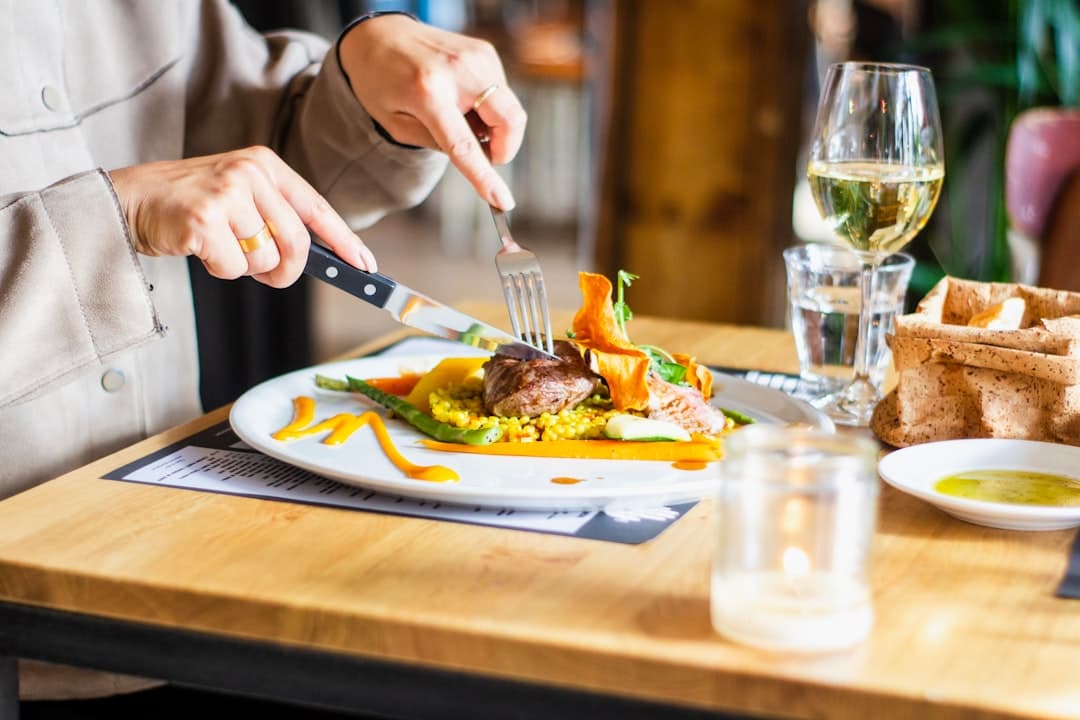
In food and beverage, photography is not decoration. It is the product on display. Strong, appetizing images of dishes, drinks, packaging, and the space itself do more to drive visits and orders than any amount of copy.
Quality matters enormously. Bright, well-composed, professionally lit photos make food look craveable. Dim, inconsistent, or low-resolution images make even great food look unappealing. For most food and beverage brands, professional photography is one of the highest-return investments in the entire website project.
Consistency ties the visuals together. The same lighting style, color treatment, and framing across every image creates a coherent brand feel. A scattered mix of styles, some bright, some dark, some filtered, makes a brand look improvised. The visual storytelling principles in our fashion ecommerce website design guide carry over directly to food and drink.
Performance Versus Image Quality
Rich photography creates a performance challenge. Large images can slow a site to a crawl, which is fatal when impatient visitors are deciding where to eat. The answer is proper image optimization: modern formats, responsive sizing, and lazy loading so the site stays both beautiful and fast.
Designing the Menu
The menu is the most visited page on almost every food and beverage website. It deserves real attention. A common mistake is uploading the menu as a PDF, which loads slowly, reads poorly on phones, and is awkward to update. The menu should be native web content.
A well-built web menu is organized into clear sections, easy to scan, readable at a glance on mobile, and simple for staff to edit when items or prices change. Dietary indicators for vegetarian, vegan, and gluten-free options, along with allergen notes, help customers and reduce friction.
- Clear structure: Group items logically so visitors find what they want fast.
- Mobile readability: Legible type and comfortable spacing on small screens.
- Easy updates: Staff should be able to change items and prices without a developer.
- Dietary information: Tags and notes that answer common questions upfront.
Selective photography on the menu helps too. Photographing every item is rarely practical, but images of signature dishes and bestsellers guide choices and lift average orders.
Making Ordering and Booking Effortless
Once a visitor is interested, the path to action must be obvious and short. Depending on the business, that action might be online ordering, table reservations, catering inquiries, or buying packaged products.
Whatever the goal, reduce friction. Online ordering and reservations often run through third-party platforms, and the website’s job is to connect to them cleanly with prominent, clearly labeled buttons. A confused or buried ordering link costs real revenue. The thinking in our CTA button design guide applies directly to making these actions impossible to miss.
For brands that sell packaged goods, a smooth ecommerce experience with clear product pages, honest shipping information, and an easy checkout is essential. For catering, a simple inquiry form that captures event date, guest count, and contact details starts the conversation without overwhelming the visitor.
Reservations and Real-Time Information
Reservation buttons should sit in obvious places, including the navigation and near the menu. If the business has special hours, seasonal closures, or limited availability, the site should reflect that accurately. Nothing frustrates a customer more than arriving at a place that the website said was open.
Mobile First, Always
Food and beverage websites are mobile experiences first. Most visitors are on a phone, frequently on the move, often deciding in the moment. If the mobile experience is slow, cramped, or hard to navigate, the desktop version barely matters.
A mobile-first food and beverage site loads fast, shows hours and location near the top, makes the menu easy to read without pinching and zooming, and keeps the order or book action within thumb reach. Tap targets should be generous and core information should never be more than a tap away.
Location details deserve special care. A clear address, an embedded map, parking notes, and accurate hours answer the practical questions that decide whether a visitor becomes a customer. Our web design best practices guide covers the mobile and performance fundamentals that keep these sites usable.
Essential Pages and Content
Most food and beverage websites are compact, which is a strength. A focused set of pages keeps visitors moving toward action.
- Homepage: Appetizing imagery, the brand’s personality, hours and location, and a clear primary action.
- Menu: Native, well-organized, mobile-friendly, and easy to update.
- Order or reservations: A direct path to the core action.
- About: The story behind the food, the people, or the sourcing.
- Locations: Address, map, hours, and parking for each spot.
- Catering or events: For businesses that offer them, with a simple inquiry path.
- Contact: Phone, email, and social links in an obvious place.
The About page is more valuable than many owners assume. Diners increasingly care about who is behind the food, how ingredients are sourced, and what the brand stands for. A genuine story builds loyalty and gives the brand a personality competitors cannot copy.
Building a Food and Beverage Website in Framer
Framer is a strong fit for food and beverage websites because it pairs visual design freedom with fast performance and easy updates. These businesses change constantly, with new menu items, seasonal specials, updated hours, and limited-time offers, and the website has to keep up.
Framer’s visual editor lets a restaurant or food brand update the menu, swap photos, or post a seasonal announcement without a developer or a slow vendor cycle. Framer sites are fast by default, which directly serves impatient mobile visitors. The design freedom means the site can express a brand’s specific personality, whether that is a cozy cafe, a bold street food concept, or a refined catering company.
As a Framer-focused agency, we build food and beverage websites that look appetizing, load fast, and stay easy for staff to maintain. The result is a site that turns hungry browsers into customers and reflects the quality of what the kitchen actually serves.
If your food or beverage business needs a website that looks as good as your food and is easy to keep current, we can help. Our team designs fast, visual, easy-to-update sites in Framer. Get in touch with us to talk about your project, or see our pricing to learn how we work.
Frequently Asked Questions
What is the most important part of a food and beverage website?
High-quality photography is the most important part. Appetizing, consistent images of food, drinks, and the space drive cravings and trust more than any copy. Paired with that, the menu and practical details like hours and location are what visitors come to find.
Should a restaurant menu be a PDF or a web page?
It should be a native web page. PDF menus load slowly, read poorly on phones, and are awkward to update. A web menu organized into clear sections is fast, mobile-friendly, easy for staff to edit, and far better for search visibility.
Why is mobile design so important for food and beverage websites?
Most food and beverage browsing happens on phones, often while people are deciding where to eat right now. If the mobile site is slow or hard to use, visitors leave for a competitor. Hours, menu, location, and the order action must all be instantly accessible on mobile.
Why use Framer for a food and beverage website?
Framer combines visual design freedom with fast performance and simple updates. Staff can change menus, swap photos, and post seasonal announcements without a developer, and Framer sites load quickly, which serves the impatient mobile visitors these businesses depend on.