An environmental nonprofit website turns belief into action. The best designs combine striking nature photography with rigorous science, clear advocacy calls, and frictionless donation flows. They recruit volunteers, mobilize supporters around campaigns, host policy briefs and reports, and convert one-time visitors into recurring donors and lifelong allies.
Why Environmental Nonprofits Need Specialized Website Design
Environmental nonprofits operate at the intersection of science, advocacy, fundraising, and storytelling. A generic nonprofit template cannot do all four jobs at once. The website has to host technical reports that journalists and policymakers cite, while also moving an emotional supporter to take action in under thirty seconds. It has to feel rigorous to a researcher and inspiring to a first-time donor.
Most environmental organizations also run on lean teams, which means the website has to do work no human can: respond to email signups instantly, route press inquiries, accept donations at any hour, mobilize action when a vote is happening, and surface the right resource to the right reader without a staff member intervening. The design choices below all serve that practical reality.
Campaign Pages That Drive Action
Campaign pages are the engine of an environmental nonprofit website. Each active campaign deserves its own URL, its own story, and its own specific call to action. A good campaign page opens with the stake (what is happening, why it matters, what is at risk), explains the science briefly with citations, names the decision being made and the decision-maker, and ends with a single, specific action: sign the petition, contact your senator, attend the hearing, donate to the rapid-response fund.
The mistake most environmental nonprofits make is loading campaign pages with too many actions. The data is consistent: a single primary call to action converts at roughly twice the rate of pages with three or more options. Secondary actions can live further down the page, but the hero section must commit to one ask. Reviewing the patterns in this landing page design guide sharpens that decision.
Scientific Reports and Policy Briefs
Environmental nonprofits often publish substantial original research: water quality studies, biodiversity reports, climate policy briefs, regulatory analyses. These documents are how journalists, policymakers, and academic partners take an organization seriously. The website must host them well.
Each report should have its own landing page with a plain-language summary, key findings as scannable bullet points, the methodology, the full PDF, downloadable charts, and clear citation guidance. A bare PDF link without context loses the search traffic and the press attention that comes from a well-structured page. Tag reports by topic, region, and date so visitors can browse a research library without staff curation.
Embedded Data Visualization
Where possible, embed interactive maps, charts, and dashboards directly in the page. A reader who can hover, filter, and zoom is far more likely to share the report and cite the data. Tools like Datawrapper, Flourish, Mapbox, and Observable make this accessible without a custom development team.
Advocacy Alerts and Action Calls
When a vote is scheduled, a rule is open for public comment, or a permit is being considered, an environmental nonprofit needs the ability to mobilize supporters in hours, not weeks. The website must be set up for this. A flexible template that lets staff publish a new advocacy alert, paste in a draft message to officials, and start collecting names within an hour is the difference between making a difference and missing the moment.
Integrate with action platforms like Action Network, EveryAction, or NationBuilder so the contact form does the heavy lifting: routing the message to the correct official by zip code, tracking signatures, sending follow-ups, and updating the supporter record in the CRM. Build the action page once, reuse it dozens of times.
Donation Flow That Actually Converts
Donation pages on environmental nonprofit websites are often where the most leverage hides. Small improvements compound. Pre-filled common amounts that match real impact moments (twenty-five dollars protects an acre, one hundred dollars funds an hour of legal review), a default to monthly giving, digital wallet support, and a single-page checkout outperform multi-step forms by a wide margin.
Avoid asking for an account before a first gift. Avoid required fields beyond name, email, address, and payment. Show an impact statement on the confirmation page, not just a receipt. The patterns in the nonprofit website design guide apply directly, and most environmental organizations also benefit from reviewing framerwebsites.com/industries/nonprofit for examples of the structure in practice.
Recurring Giving as the Default
Recurring donors give roughly six times what one-time donors give over the course of a relationship. Make recurring the default option, not a buried checkbox. Frame the ask in terms the donor cares about: “twenty dollars a month plants ten trees a year” lands harder than “support our mission with a recurring gift.”
Volunteer Signup and Engagement
Volunteers are the backbone of most environmental nonprofits, from beach cleanups to citizen science to canvassing. The volunteer signup page should distinguish between one-time events (with a simple RSVP), recurring opportunities (with a calendar or shift system), and skill-based volunteering (with an application). Each should ask for only what is needed at this stage. Asking a first-time beach cleanup volunteer for a resume kills conversion; asking a pro-bono attorney for a quick form does not.
Follow up automatically. A volunteer who signs up and hears nothing for two weeks is gone. Confirmation, reminder, day-of details, and post-event thanks should all happen without staff effort.
Photography That Connects, Not Just Decorates
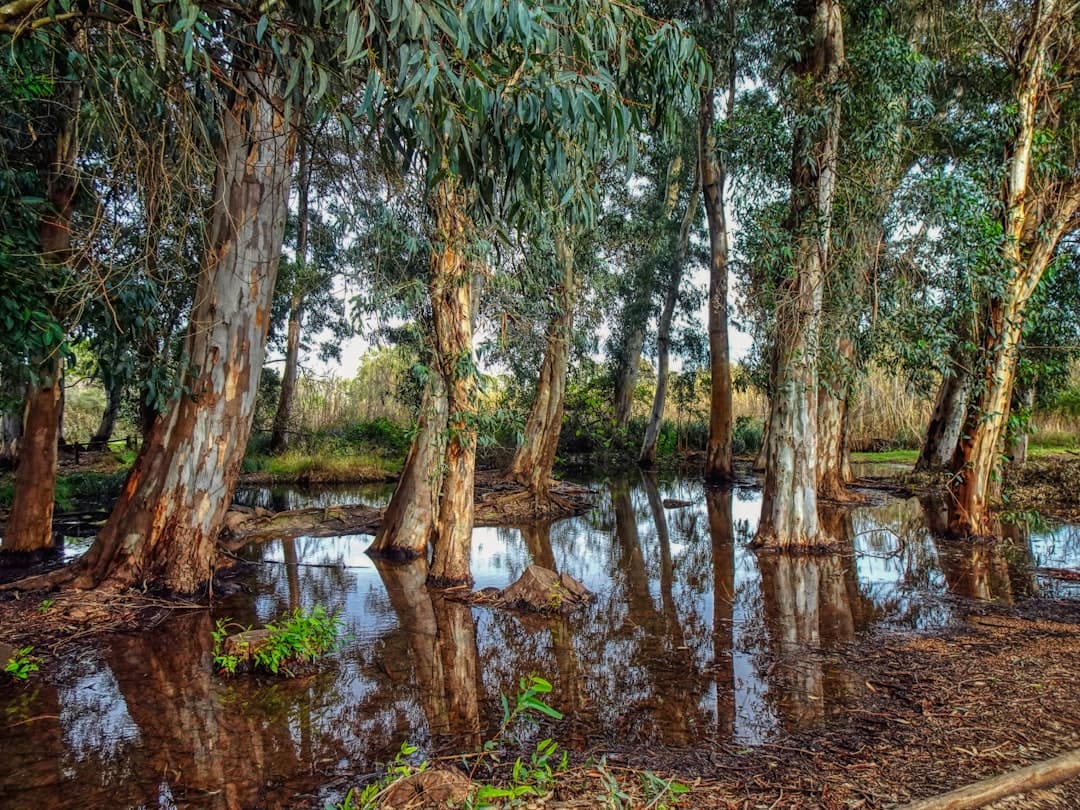
Environmental nonprofits have an asset most organizations envy: extraordinary visual material. The forests, oceans, animals, and people they work with photograph beautifully. The website must use that material with intention, not just as decoration.
Use real photography from the organization’s own work, not stock. Show people, not just landscapes. A volunteer planting a tree, a scientist taking water samples, a community member speaking at a hearing – these images build belief that the organization is doing what it says. For best results, run images through aggressive optimization. A 4MB hero image can sink an otherwise excellent site, so a quick read of this image optimization guide pays for itself fast.
Impact Storytelling
Donors and supporters want to know what their support actually accomplishes. An impact section, separate from the donation page, should tell that story with specifics. Acres protected, species recovered, regulations passed, cases won, communities supported. Numbers paired with named individuals and concrete places land harder than abstract claims.
Annual impact reports are an underused asset. Most environmental nonprofits already produce one, but few host it as a designed web experience. Convert the PDF into a scrollable web page with sections, animated counters, and embedded video. The same data, presented as a designed page, gets shared and cited dramatically more than a downloaded file.
Technology Choices for Environmental Nonprofits
The platform decision matters. Most environmental nonprofits do best on a modern website builder that lets staff publish without a developer. Framer is a strong fit for organizations that want a designed, distinctive website without the maintenance overhead of a custom build. WordPress remains a sensible choice for organizations with active content teams, especially when an existing CRM integration matters. Squarespace works for smaller organizations with limited technical capacity.
Whichever platform you choose, plan integrations from day one: CRM (Salesforce, EveryAction, Bloomerang), email marketing (Mailchimp, Constant Contact), donation processing, and action platforms. Duplicated data across systems is the silent killer of nonprofit web operations.
Mobile, Accessibility, and Performance
The majority of environmental nonprofit website traffic now comes from mobile devices, often during a moment of attention triggered by a news story or a friend’s share. The mobile experience cannot be a compressed version of the desktop site. Service times, action buttons, and donation flows all need to work flawlessly on a phone with a poor connection.
Accessibility is non-negotiable for an organization committed to including all people. High contrast, screen reader compatibility, captions on every video, and keyboard-friendly navigation are baseline requirements. The website accessibility guide covers the standards in practical terms. Performance matters too. A nonprofit website that loads in over four seconds loses roughly a quarter of its visitors before the first paint.
Common Mistakes Environmental Nonprofits Make
The most common mistakes fall into recognizable patterns. A donation button hidden in the navigation. Reports as PDFs without landing pages, invisible to search engines. Campaign pages with five competing calls to action. Volunteer forms that demand a resume for a one-time event. Stock photography of generic forests instead of the organization’s actual work. An impact section full of vague language and no numbers.
The single most damaging mistake is treating the website as a brochure rather than a tool. Environmental nonprofits that treat their site as the central organizing hub – where supporters take their first action, deepen engagement, and ultimately give – consistently outperform organizations that treat the site as static signage.
Frequently Asked Questions
How much does an environmental nonprofit website cost?
A polished environmental nonprofit website typically costs five thousand to twenty thousand dollars to design and build, with ongoing platform and integration costs of fifty to three hundred dollars per month. Larger organizations with research libraries, advocacy systems, and CRM integrations can spend more. A modern website builder paired with a designer experienced in nonprofit work brings most of these projects in well under twenty thousand.
What is the most important page on an environmental nonprofit website?
The active campaign or advocacy page is consistently the highest-impact page when a campaign is running. Outside campaigns, the donation page drives the most direct value. Both should be obsessively optimized, tested, and updated.
Should we host scientific reports as PDFs or web pages?
Both. Each report deserves its own web page with a summary, key findings, methodology, and embedded visuals, plus a downloadable PDF. Search engines, journalists, and casual readers all need the web page. Researchers and policymakers will still want the PDF for citation.
How do we handle donations on the website?
Embed a donation form directly using a service like Donorbox, Stripe, Classy, or your CRM’s native form. Default to recurring monthly giving, accept digital wallets, pre-fill common amounts tied to specific impact moments, and never require account creation before a first gift.
How often should we update the website?
Active campaign pages should be updated within hours of new developments. The homepage hero should rotate to the most current campaign or news. Reports, blog posts, and impact stories should be added at least monthly. Static pages like the about, mission, and team should be reviewed twice a year.